01
One platform.
Multiple CAs.
Connect internal and external Certificate Authorities and manage certificates through one unified platform.

Take control of every certificate across your enterprise. Centralize, automate and manage digital certificates across public and private Certificate Authorities, applications, devices and PKI environments, from one enterprise Certificate Lifecycle Management platform.

CEMA is an enterprise Certificate Lifecycle Management (CLM) platform that centralizes and automates digital certificate management across complex PKI environments. It connects multiple Certificate Authorities, supports automated certificate enrollment and lifecycle processes, and integrates certificate management with existing enterprise infrastructure through standard protocols and REST APIs.
CEMA provides a central management layer between your certificate consumers and Certificate Authorities, helping teams manage certificates, automate lifecycle operations and establish consistent governance without rebuilding their existing PKI.
Try CEMA and experience it in your own trial environment.
Digital certificates establish trust across applications, servers, users, devices, cloud services and connected infrastructure.
But as enterprise environments grow, certificate management becomes fragmented across Certificate Authorities, platforms, teams and processes.
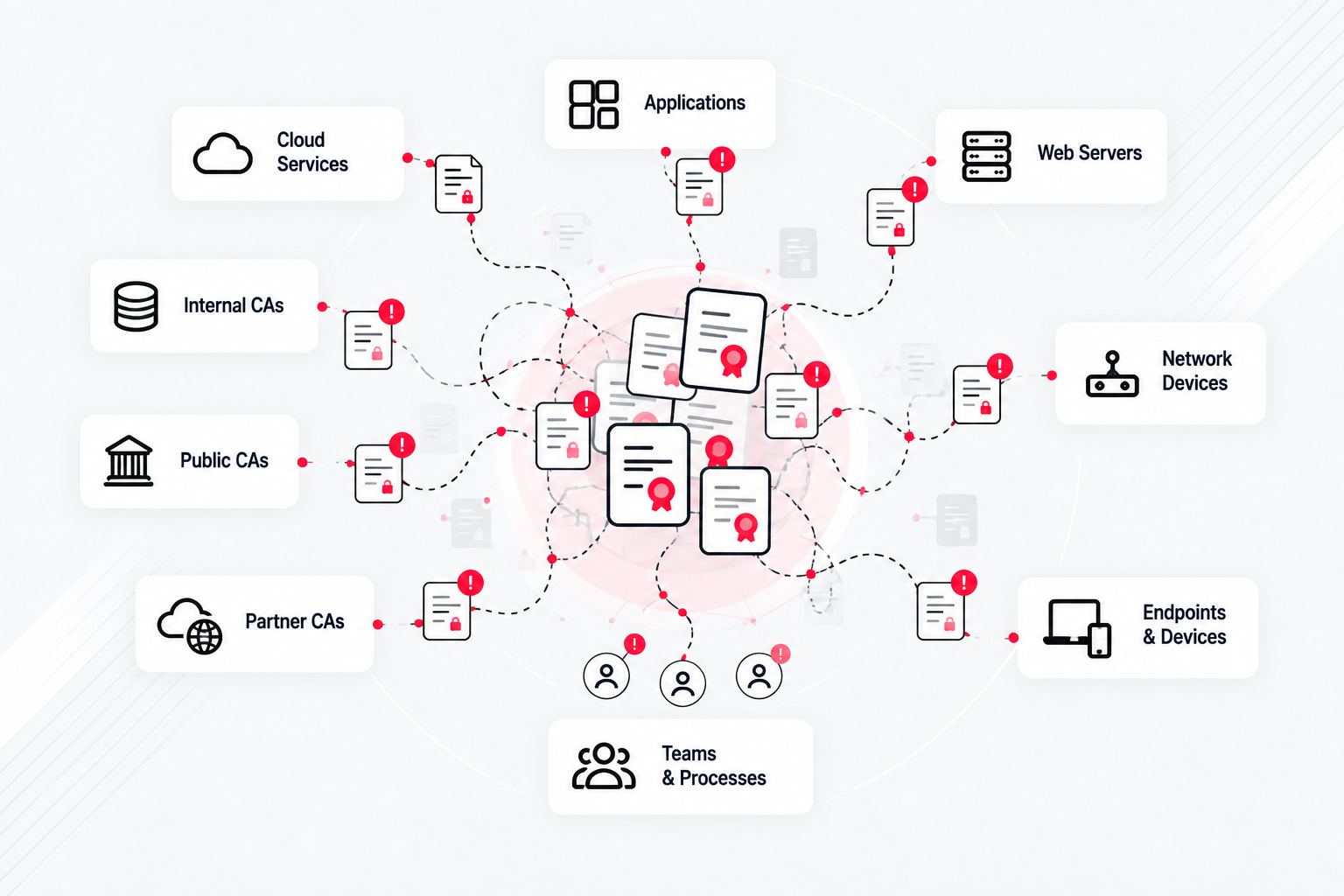
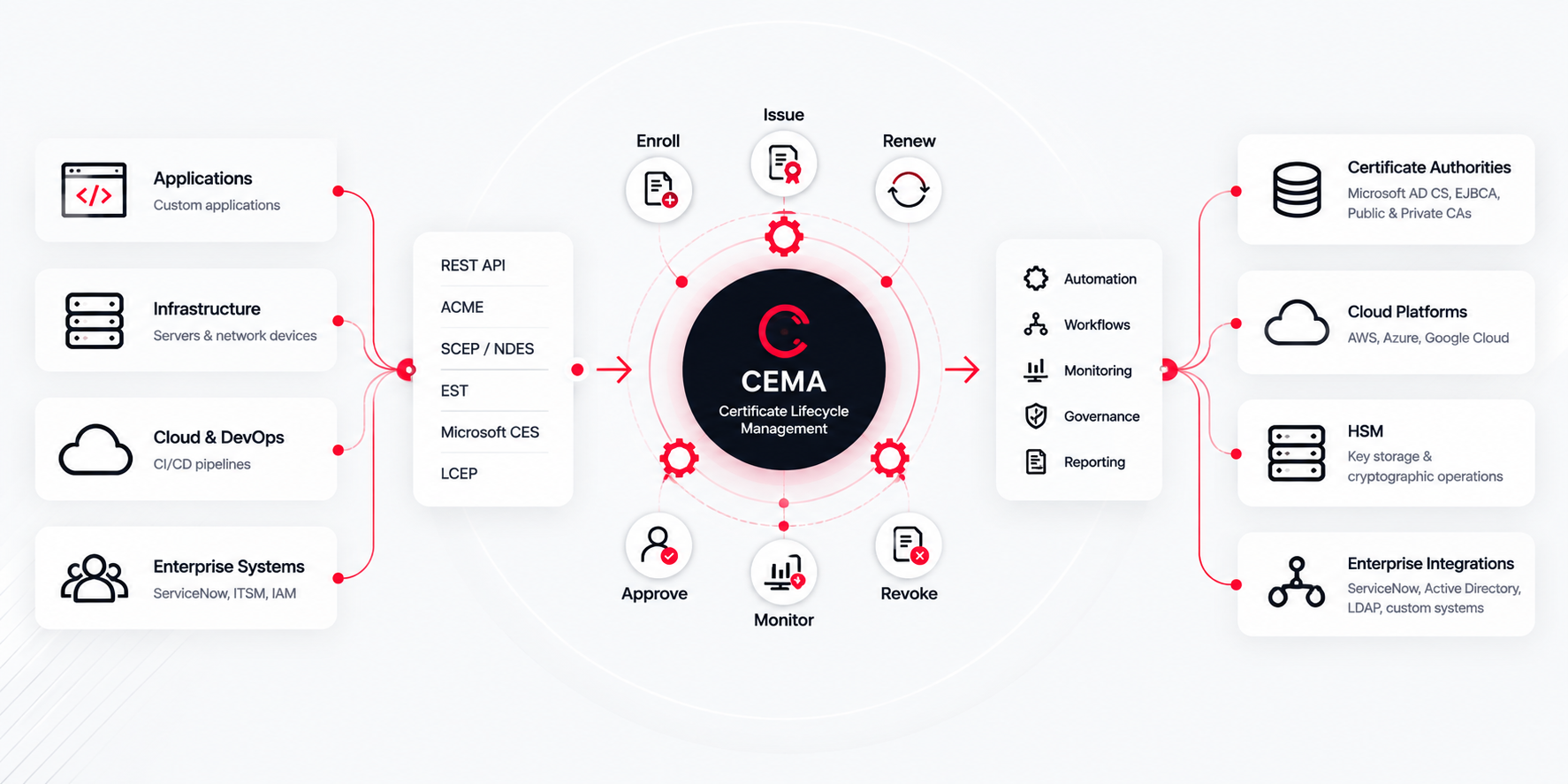
CEMA centralizes certificate lifecycle management across Certificate Authorities, applications, infrastructure and devices, helping enterprise teams automate certificate operations while maintaining control and governance.
Gain centralized visibility into certificates, cryptographic assets and certificate activity across your enterprise PKI.
Maintain a consolidated view of certificates across connected Certificate Authorities and environments.
Track certificate status, usage and lifecycleinformation from a centralized interface.
Identify certificates approaching expirationand receive notifications about important certificate events.
Understand which certificates, keys and algorithms are in use to support crypto-agility initiatives.
Build visibility into cryptographic assets and processes as your organization prepares for evolving algorithms and post-quantum cryptography.


Automate certificate lifecycle operations and connect CEMA with your existing PKI, applications, devices and enterprise systems.
Manage certificates across internal and public Certificate Authorities through a unified interface.
Reduce manual operations by automating certificateenrollment, issuance and renewal.
Integrate certificate lifecycle operations directly into applications and enterprise workflows through CEMA's REST API.
Automate certificate enrollment using supported protocols and technologies including ACME, SCEP/NDES, EST, Microsoft CES and LCEP.
Connect certificate processes with directories, applications, infrastructure and enterprise workflows.
Integrate CEMA with CipherMail to support certificate-based processes within secure email environments.
Control who can request, approve and manage certificates with enterprise authentication, granular permissions and secure key-management integrations.
Assign users and groups to defined roles withspecific privileges, helping ensure certificate operations are available onlyto authorized users.
Enforce multi-factor authentication for high-privileged users to add an additional layer of protection to sensitive certificate-management operations.
Integrate CEMA with Microsoft Active Directory and use Kerberos authentication to simplify secure access and user management in enterprise environments.
Use OpenID Connect for standards-based authentication and integrate CEMA with existing enterprise identity providers.
Separate certificate requests, approvals and administrative responsibilities across different users and roles to support controlled certificate-management processes.
Integrate CEMA with Hardware Security Modules (HSMs) for secure cryptographic key storage and key-management operations.
Separate users, roles and certificate-managementenvironments across tenants while maintaining centralized administration withinCEMA.

CEMA sits between certificate consumers andCertificate Authorities, providing a central layer for certificate lifecycleautomation, administration and governance.

CEMA centralizes certificate lifecycleoperations from enrollment and approval through issuance, deployment,monitoring, renewal and revocation across connected Certificate Authorities andenterprise environments.

The configurable CEMA dashboard gives administrators centralized visibility into certificate status, system health and certificate activity.
Monitor active certificates, upcoming expirations, revoked certificates, configuration issues and certificate statistics from one interface.

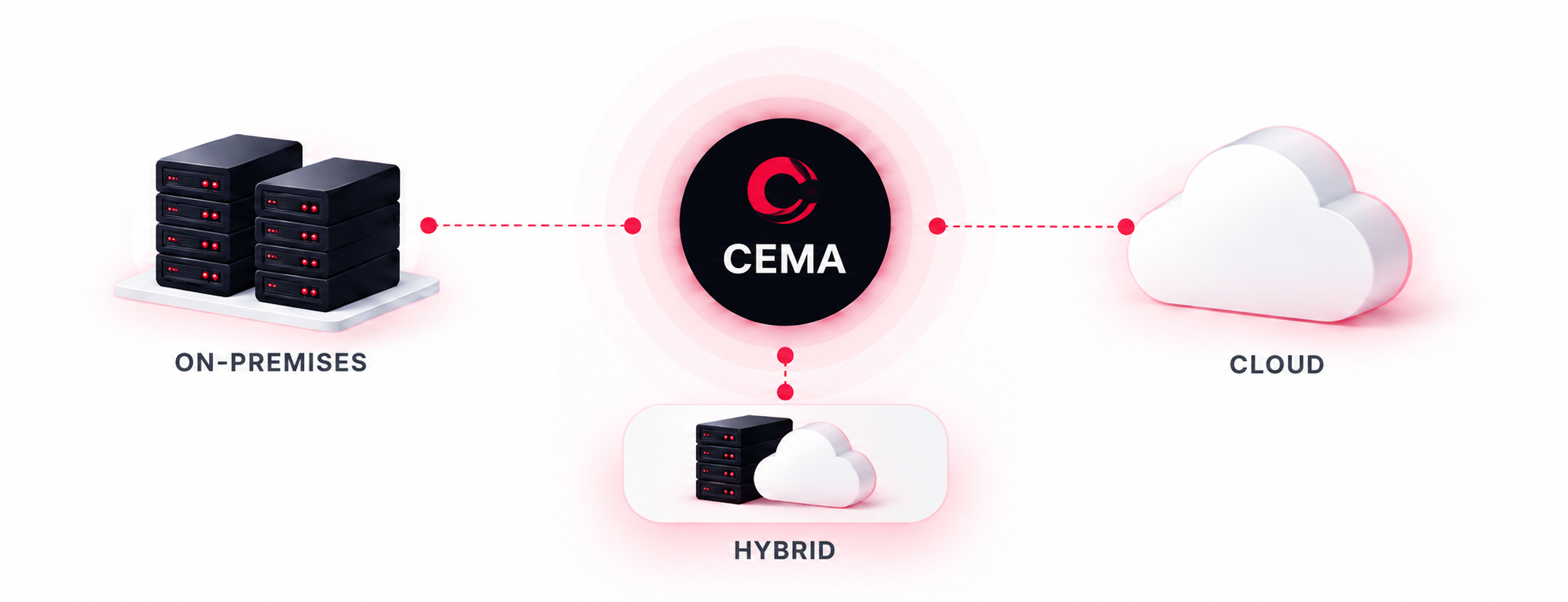
Run CEMA in the environment that fits your infrastructure, security and operational requirements.
Explore CEMA in your own trial instance and see how enterprise Certificate Lifecycle Management works in practice.
Get started in 3 simple steps.
Complete the short registration form using your company email address.
Check your inbox and follow the verification instructions to activate access to your CEMA trial.
Sign in to your trial instance and start exploring the CEMA dashboard and certificate-management capabilities.

CEMA is an enterprise Certificate Lifecycle Management (CLM) platform for centrally managing and automating digital certificate processes across complex PKI environments. It connects certificate consumers, Certificate Authorities and enterprise systems through a central management and automation layer.
Certificate Lifecycle Management (CLM) is the management of digital certificates throughout their lifecycle, including enrollment, issuance, deployment, monitoring, renewal and revocation.
CEMA helps organizations centralize certificate management across multiple PKI environments, automate lifecycle processes, connect different Certificate Authorities and establish consistent certificate governance.
Yes. CEMA supports multi-CA environments and can provide centralized management across internal and external Certificate Authorities.
Yes. CEMA supports integration with Microsoft Active Directory Certificate Services and Microsoft certificate enrollment technologies.
Yes. CEMA supports ACME for automated certificate enrollment, including web, cloud and DevOps use cases.
Yes. CEMA supports SCEP/NDES and EST alongside additional certificate enrollment methods.
Yes. CEMA supports certificate lifecycle automation, including programmatic certificate issuance, renewal and revocation.
Achieve crypto agility by tracking which cryptographic keys and algorithms that are in use.
Yes. CEMA provides REST APIs for certificate lifecycle operations, administration, configuration and enterprise integration.
Yes. ServiceNow is one example of an enterprise system that can be integrated with CEMA through its REST API.
Yes. CEMA supports on-premises, cloud and hybrid deployment architectures.
Yes. CEMA supports granular role-based access management, role hierarchies and separation of duties.
Yes. CEMA supports multi-tenancy and departmentalization for logically separated PKI environments.
CEMA supports client certificate authentication, Kerberos and OpenID Connect, as well as optional MFA for highly privileged users
CEMA supports post-quantum cryptographic algorithms, helping organizations prepare certificate infrastructure for evolving cryptographic requirements.

Amanda Pisani
Chief Security Operations, Moloco

See how CEMA can help centralize certificatemanagement, automate certificate lifecycles and connect certificate operationsacross your enterprise PKI.