ACME Frontend
Automate certificate enrollment using the ACME protocol and supported domain or resource ownership validation methods.

Simplify certificate enrollment across devices, applications and enterprise systems.Certificate Hub connects your existing Certificate Authorities with multiple enrollment protocols, enabling automated certificate provisioning without complex client integrations or replacing your existing PKI.

ID Security Certificate Hub, also referred to as Enrollment Hub, is a certificate enrollment platform that connects devices, applications and enterprise systems to Certificate Authorities through multiple enrollment protocols.
It provides protocol-specific frontends that behave like a Certificate Authority from the client's perspective, while shielding clients from differences between backend CA interfaces.
By supporting ACME, SCEP/NDES, EST, Microsoft CEP/CES, DCOM and LCEP, Certificate Hub helps organizations automate certificate provisioning, improve compatibility and maintain centralized control over enrollment policies.
Enterprise environments contain devices, applications and systems that rely on different certificate enrollment protocols.
However, Certificate Authorities often expose a limited set of interfaces that do not match every client's technical requirements.
These compatibility gaps can lead to manual workarounds, complex integrations and failed certificate enrollment, making PKI operations harder to scale.
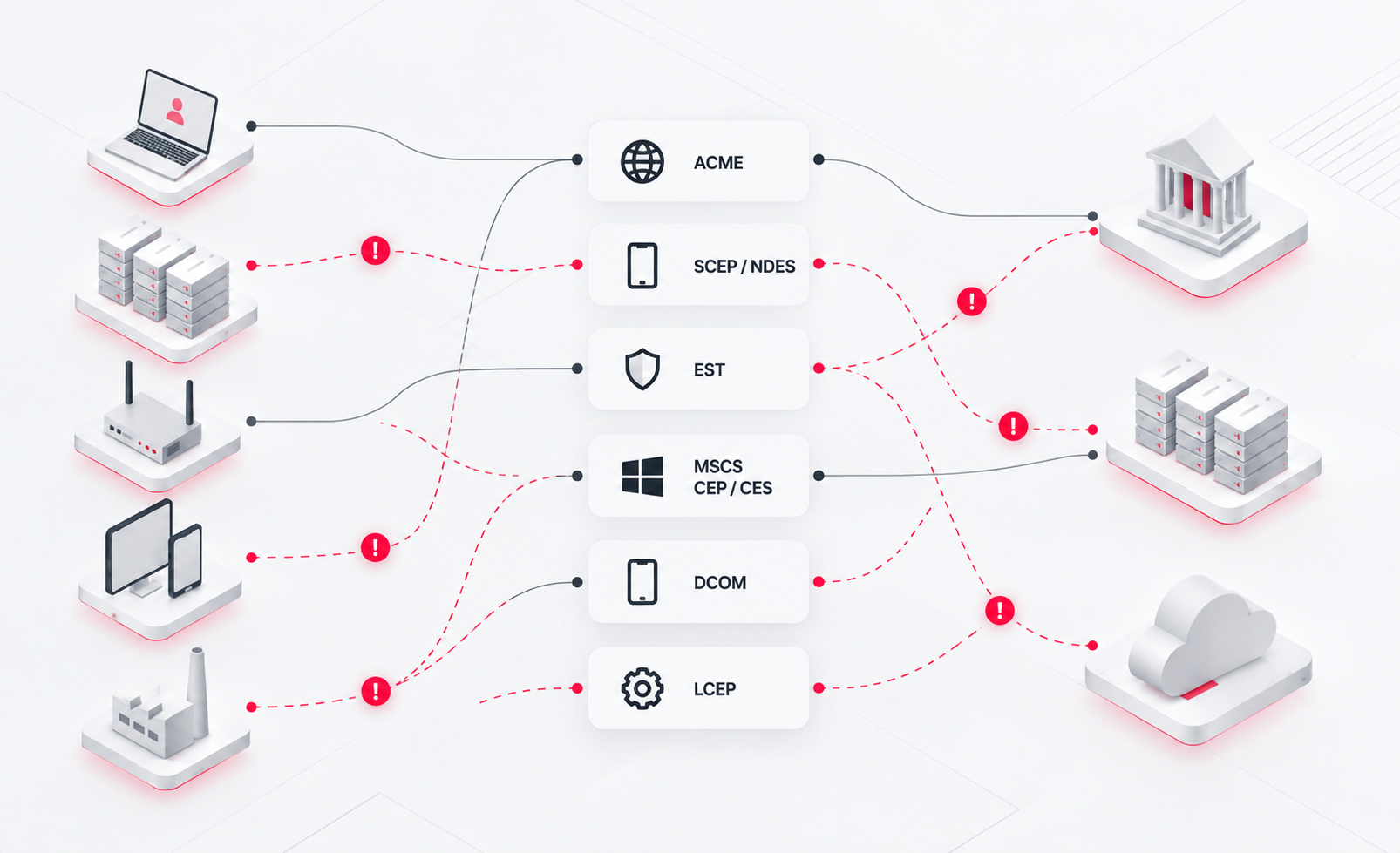
Certificate Hub bridges the gap between certificate consumers and Certificate Authorities. It provides multiple enrollment interfaces, supports automated certificate provisioning and helps organizations integrate heterogeneous devices without replacing their existing PKI.
Support ACME, SCEP/NDES, EST, MicrosoftCEP/CES, DCOM and LCEP.
Connect certificate consumers with supported internal, external and Trust Center Certificate Authorities.
Reduce manual enrollment tasks through protocol-based certificate issuance.
Connect systems that require different certificate enrollment interfaces.
Separate Certificate Authorities from direct client access to strengthen infrastructure protection.
Support separation of tenants and centralized policy administration.
Use standard or customized certificate templates to meet organizational requirements
Support clustering, auditing and certificate lifecycle notifications.
Certificate Hub provides protocol-specific frontends that allow different devices, applications and enterprise systems to request certificates from connected Certificate Authorities.
Each frontend addresses particular client requirements, helping organizations support heterogeneous PKI environments without developing custom enrollment interfaces for every system.
Certificate Hub enables automated certificate provisioning across different client technologies, enrollment protocols and Certificate Authority environments.It helps organizations connect devices and applications to existing PKI infrastructure, reduce enrollment compatibility issues and standardize certificate provisioning.
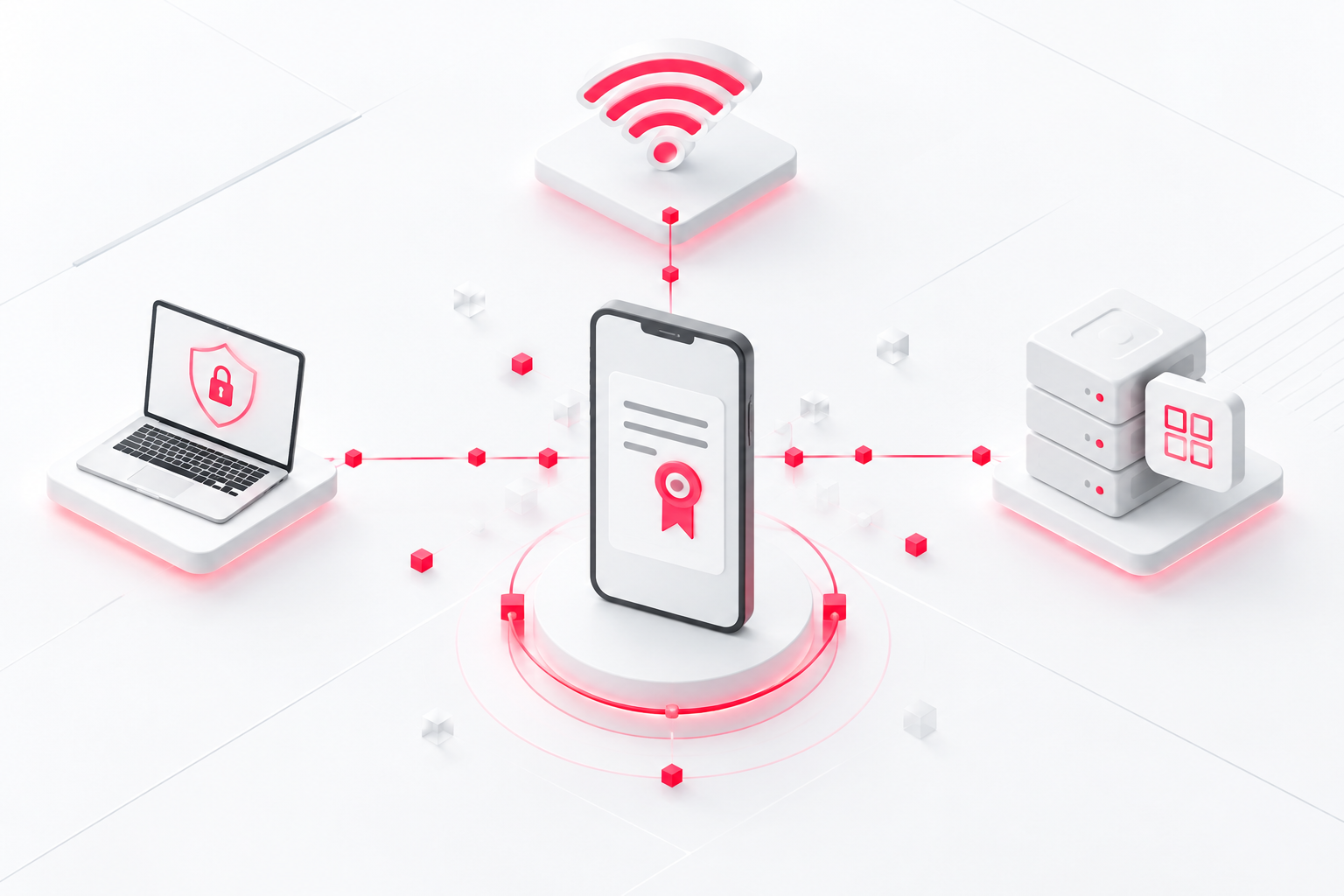
Automate certificate enrollment across different devices and applications.Support certificate provisioning for network devices, web services and mobile applications using compatible enrollment protocols.
Provision certificates for compatible network devices using SCEP and EST enrollment interfaces.
Automate certificate requests for supported web servers and TLS services using ACME.
Enable certificate provisioning for supported Android and iOS applications using LCEP and the intelliCard Mobile
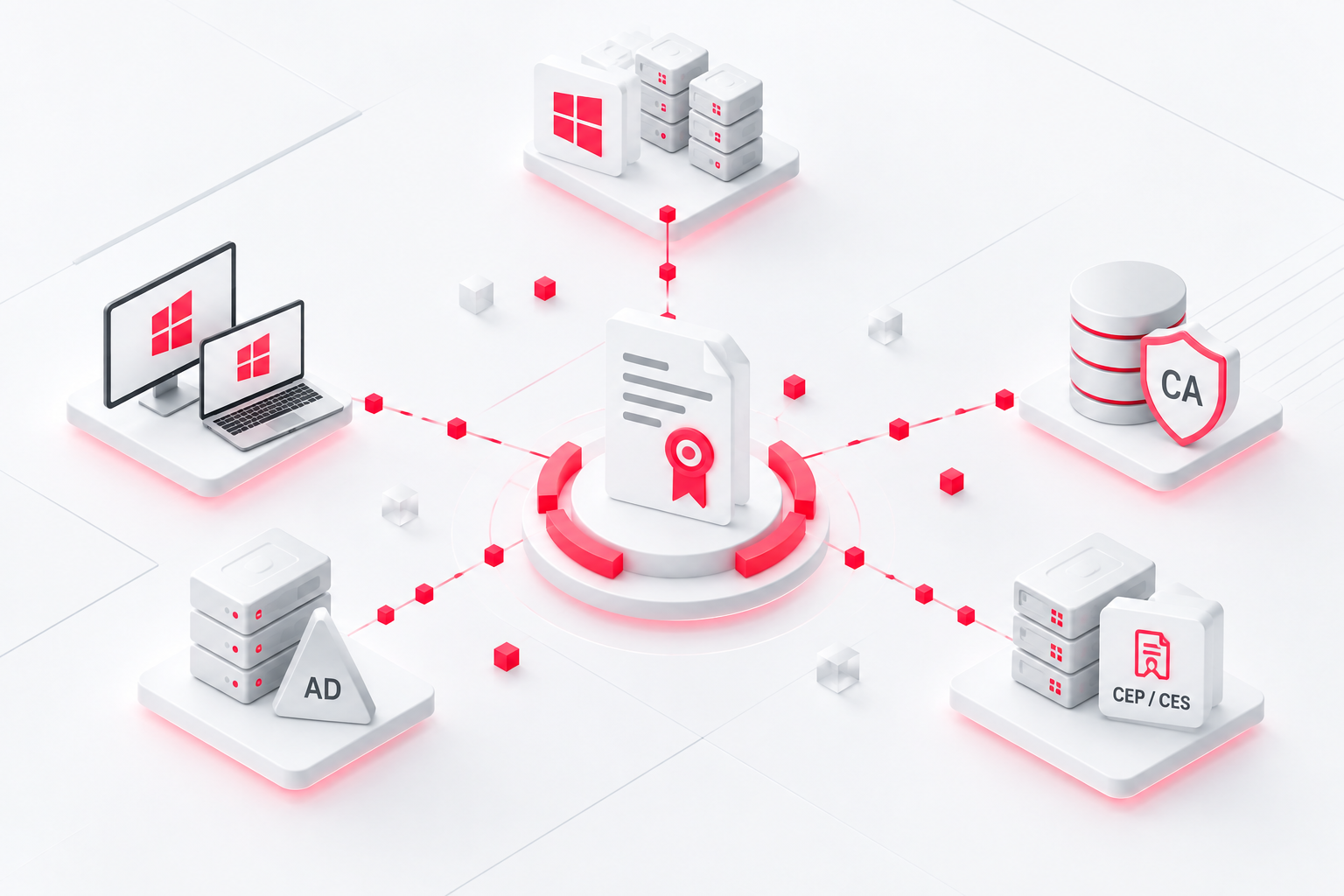
Connect Microsoft environments and existing Certificate Authorities. Simplify certificate enrollment across enterprise systems while retaining your existing PKI infrastructure.
Support Microsoft certificate enrollment scenarios using CEP, CES and selected DCOM interfaces.
Connect supported certificate consumers to internal, external and Trust Center Certificate Authorities through compatible enrollment frontends.
Standardize certificate enrollment across heterogeneous infrastructure.Reduce protocol compatibility challenges and manual administration through a centralized enrollment layer.
Provide consistent certificate enrollment interfaces across diverse devices, applications and organizational environments.
Apply supported standard or customized certificate templates and configured enrollment policies to meet organizational requirements.
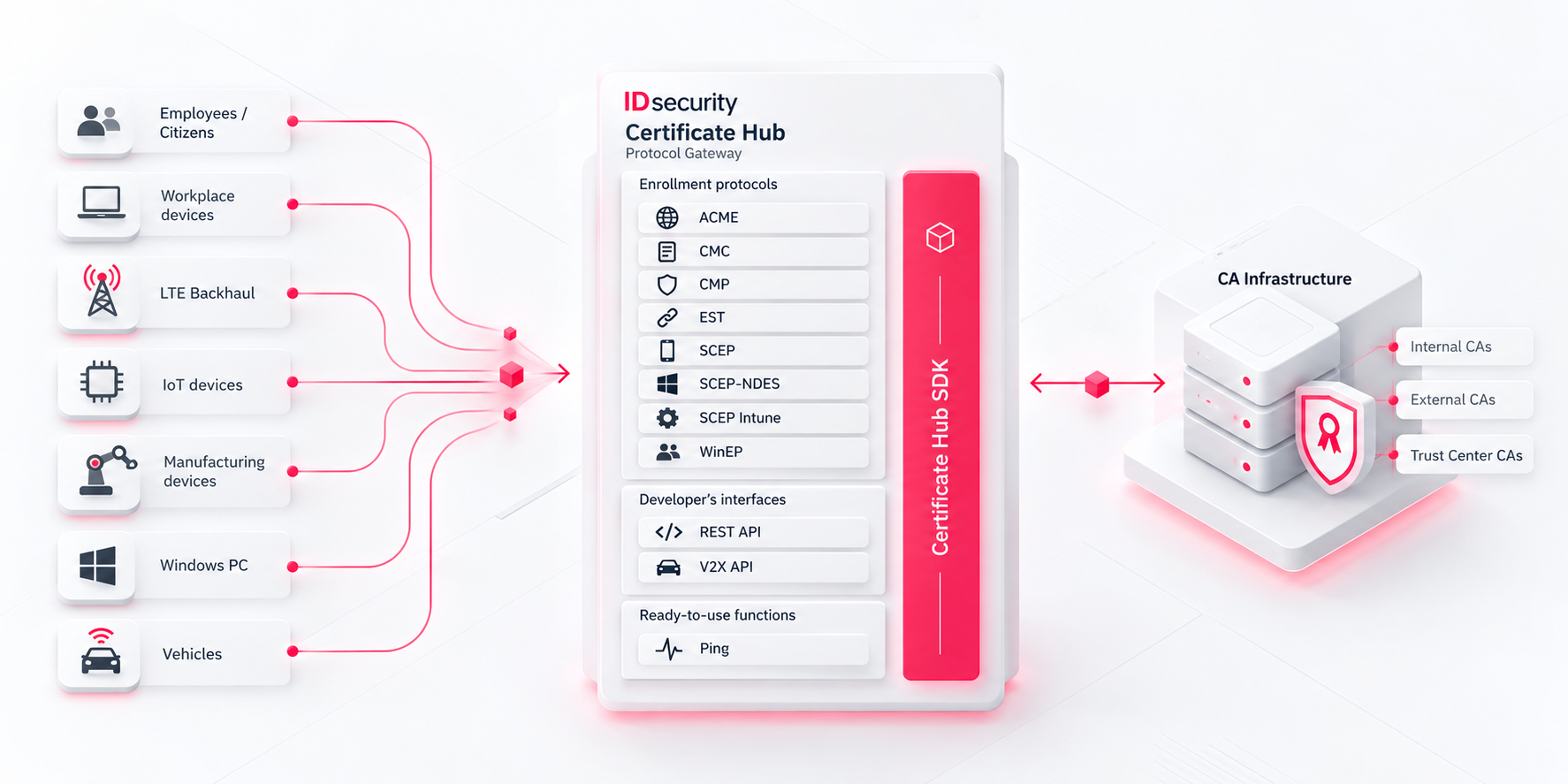
Certificate Hub sits between certificate consumers and connected Certificate Authorities, providing enrollment interfaces that match the technical requirements of different clients.
Devices and applications submit certificate requests through supported protocols. Certificate Hub processes those requests through its configured frontend and backend integration, allowing certificates to be issued through the connected CA infrastructure.
From the client's perspective, the frontend behaves like a Certificate Authority, reducing the need for direct integration with each backend CA.
Accept certificate requests through supported enrollment interfaces including ACME, SCEP, EST and Microsoft protocols.
Connect supported certificate consumers to existing internal, external or Trust Center Certificate Authorities.
Apply configured enrollment policies and standard or customized certificate templates.
Support operational oversight through auditing and certificate lifecycle event notifications
Certificate Hub supports deployment of its protocol-specific frontends on supported Linux and Windows servers, depending on the frontend.
The supplied product information also describes clustering, tenant separation and a hardened software stack to support enterprise operational and security requirements.
Certificate Hub connects different certificate consumers to supported Certificate Authorities through protocol-specific enrollment interfaces.
By bridging differences between client requirements and CA interfaces, it helps organizations automate certificate provisioning without replacing their existing PKI infrastructure.
Answers to common questions about Certificate Hub, certificate enrollment protocols, CA compatibility, automation and enterprise deployment.
Certificate Hub, also called Enrollment Hub, is an ID Security certificate enrollment platform that connects devices, applications and enterprise systems to Certificate Authorities through protocol-specific frontends. It helps overcome differences between client enrollment requirements and CA interfaces, enabling more consistent certificate provisioning across heterogeneous PKI environments.
Certificate Hub supports ACME, SCEP/NDES, EST, Microsoft Certificate Enrollment Policy (CEP) and Certificate Enrollment Service (CES), Microsoft DCOM and the proprietary Lightweight Certificate Enrollment Protocol (LCEP). Each frontend addresses different client technologies and certificate enrollment requirements.
Yes. Certificate Hub is designed to connect compatible certificate consumers with existing internal, external and Trust Center Certificate Authorities. It provides an enrollment layer between clients and supported CA interfaces, reducing the need to replace existing PKI infrastructure.
Certificate Hub focuses on certificate enrollment and protocol compatibility between clients and Certificate Authorities. CEMA is an enterprise Certificate Lifecycle Management platform designed for broader certificate lifecycle automation, centralized visibility, administration and governance across PKI environments. The products address different, potentially complementary requirements.
Yes. Certificate Hub supports automated certificate provisioning through its protocol-specific frontends. Compatible clients can request certificates using supported enrollment protocols, reducing the need for manual certificate requests and custom client-side integrations. The available automation depends on the frontend, connected CA and configuration.
Yes. Certificate Hub includes an ACME frontend for automated certificate enrollment using supported domain or resource ownership validation methods. ACME is commonly used for automating TLS certificate provisioning for web servers and compatible infrastructure.
Yes. Certificate Hub provides a SCEP frontend supporting certificate enrollment for compatible clients, including environments using Microsoft's Network Device Enrollment Service (NDES) approach. SCEP is commonly used for network devices and managed endpoints.
Yes. Certificate Hub provides Microsoft CEP and CES frontends and a selected implementation of Microsoft DCOM certificate enrollment interfaces. These support compatible Microsoft certificate enrollment and auto-enrollment scenarios. Specific capabilities depend on the frontend and deployment configuration.
Yes. Certificate Hub includes an LCEP frontend for supported Android and iOS applications using the intelliCard Mobile KeyStore library. LCEP provides a proprietary certificate enrollment interface designed for applications integrated with that library.
Yes. The Certificate Hub product information describes tenant separation as an enterprise security capability. This supports separating enrollment environments for different organizational requirements. The exact tenant configuration and isolation model should be confirmed for the intended deployment.
Yes. Certificate Hub supports configurable enrollment policies and standard or customized certificate templates. These help organizations control certificate provisioning according to their requirements. Available policy settings depend on the supported frontend and connected Certificate Authority.
Certificate Hub supports deployment of protocol-specific enrollment frontends on supported Linux and Windows servers, depending on the frontend. The product information also describes clustering capabilities and a hardened software stack. Supported operating systems, versions and configurations should be confirmed before deployment.

Amanda Pisani
Chief Security Operations, Moloco

Connect your devices, applications and enterprise systems to existing Certificate Authorities through flexible enrollment interfaces.Discuss your infrastructure, protocol requirements and certificate provisioning challenges with the ID Security team.